Newsletter Subscribe
Enter your email address below and subscribe to our newsletter

 ByJohn A
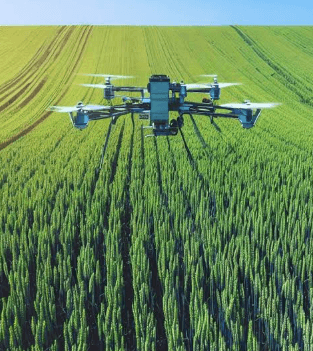
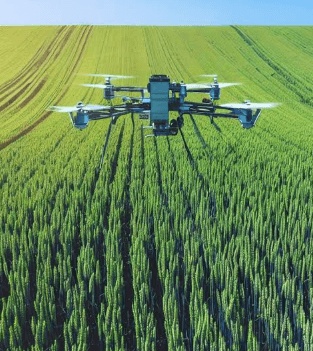
AI-powered pest detection systems promise early warning and rapid identification across fields and devices. Sensor fusion and interoperable models support scalable, cross-environment performance. Data quality controls and drift validation aim for stable accuracy. Structured feedback loops translate observations into management actions, with clear labeling and diverse data guiding recalibration. The balance between autonomy and oversight remains central, inviting further examination of deployment challenges and adaptive strategies that keep pests in view and farmers prepared.
AI-powered pest detection systems enhance early warning, rapid identification, and targeted intervention. They quantify pest species presence, enable field scalability, and maintain cross compatibility across devices.
Systemic monitoring reveals model drift patterns, guiding maintenance and retraining. Sensor fidelity supports reliable measurements, while real time alerts empower timely decisions. The approach fosters autonomy, evidence-based action, and freedom through informed management.
Data quality directly shapes detection accuracy in AI-driven pest monitoring. The analysis notes that pest labeling accuracy, annotation quality, and dataset diversity drive performance.
Data preprocessing standardizes inputs, while sensor calibration ensures consistent signals.
Model drift undermines reliability unless monitored; ongoing recalibration and validation are essential.
Clear labeling and diverse datasets reduce biases, improving generalization and robust pest detection across environments.
Selecting the appropriate sensors, models, and interfaces is foundational to effective pest detection. A disciplined choice emphasizes compatibility, scalability, and measurable performance. Sensor fusion integrates heterogeneous data, enhancing robustness and situational awareness. Model interoperability enables seamless updates and cross-domain validation, reducing vendor lock-in. System design prioritizes interoperability standards, clear interfaces, and documented evaluation metrics to sustain transparent, freedom-oriented scientific progress.
Effective deployment translates insights into action through structured, field-tested workflows.
Field teams implement continuous monitoring to maintain reliability, validating sensor data, model outputs, and decision thresholds in real conditions.
Tracking latency and model drift are tracked transparently, enabling timely recalibration.
Actionable feedback loops convert observations into iterative improvements, balancing autonomy with oversight while preserving freedom for adaptive, evidence-based pest management strategies.
Validation is achieved by applying robust validation methods, cross domain datasets, and independent traceability. Systematically compare alerts with ground truth, quantify uncertainty, and document performance metrics. Cross domain datasets enhance generalization while maintaining transparency and reproducibility for informed, autonomous decision-making.
Satire aside, privacy concerns require robust data anonymization and governance; security considerations for field data demand encryption, access controls, and audit trails, ensuring lighter-footed researchers retain freedom while mitigating exposure, theft, or misuse of sensitive agricultural information.
See also: thedesperateblogger
AI detection can identify multiple pests simultaneously in one image, though accuracy declines with weather impact and lighting variability. Multi pest recognition benefits from robust models; empirical results show consistent performance under controlled lighting and moderate weather conditions.
False positives and false negatives are mitigated through model calibration and threshold tuning, enabling rational trade-offs; systematic evaluation guides threshold choices, while ongoing monitoring adjusts performance, ensuring practical reliability without compromising exploratory freedom.
Storm impact and weather variability can degrade AI pest detection reliability, as illumination shifts, precipitation, and wind disturb imagery. Systems may exhibit reduced accuracy and slower responses, necessitating robust preprocessing, redundancy, and continuous model recalibration for resilient performance.
AI-powered pest detection weaves sensors, models, and workflows into a cohesive vigil. Data quality guides accuracy; interoperability safeguards cross-device reliability; and continuous validation keeps drift at bay. Field deployment transforms insights into decisive action, promoting timely interventions and reduced losses. Like a steady compass, the system translates observations into targeted controls, while feedback loops sharpen performance over time. In this measured, empirical arc, automation complements human judgment, delivering adaptive, evidence-based pest management.